What Is ROIC
ROIC, which stands for Return on Invested Capital, is an indicator of how efficiently a company generates profits using capital invested in its business activities.
ROIC vs ROE
Similar to ROIC, ROE is also an indicator of profitability relative to capital but there are following differences.
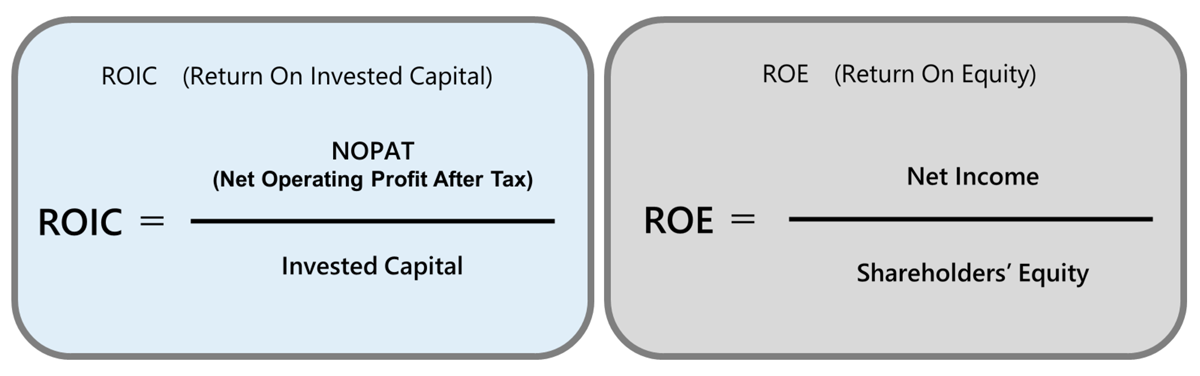
ROE is a measure of a company’s profitability from the perspective of shareholders. It represents the ratio of the company’s bottom line, which is the source of dividends that the company returns to shareholders, to funds collected from shareholders.
ROIC is a measure of a company’s profitability from the perspective of management. It represents the ratio of profits generated from business activities to all invested capital, including capital borrowed from financial institutions in addition to shareholders’ equity.
Why ROIC Is Gaining Attention
In 2014, the Ministry of Economy, Trade and Industry in Japan released the ITO Report, which recommended that companies should aim for an ROE of 8% or more for sustainable growth. In response, many companies adopted ROE as a key management indicator.
In addition, the Tokyo Stock Exchange is requesting listed companies to manage their businesses with an awareness of capital costs and stock prices.
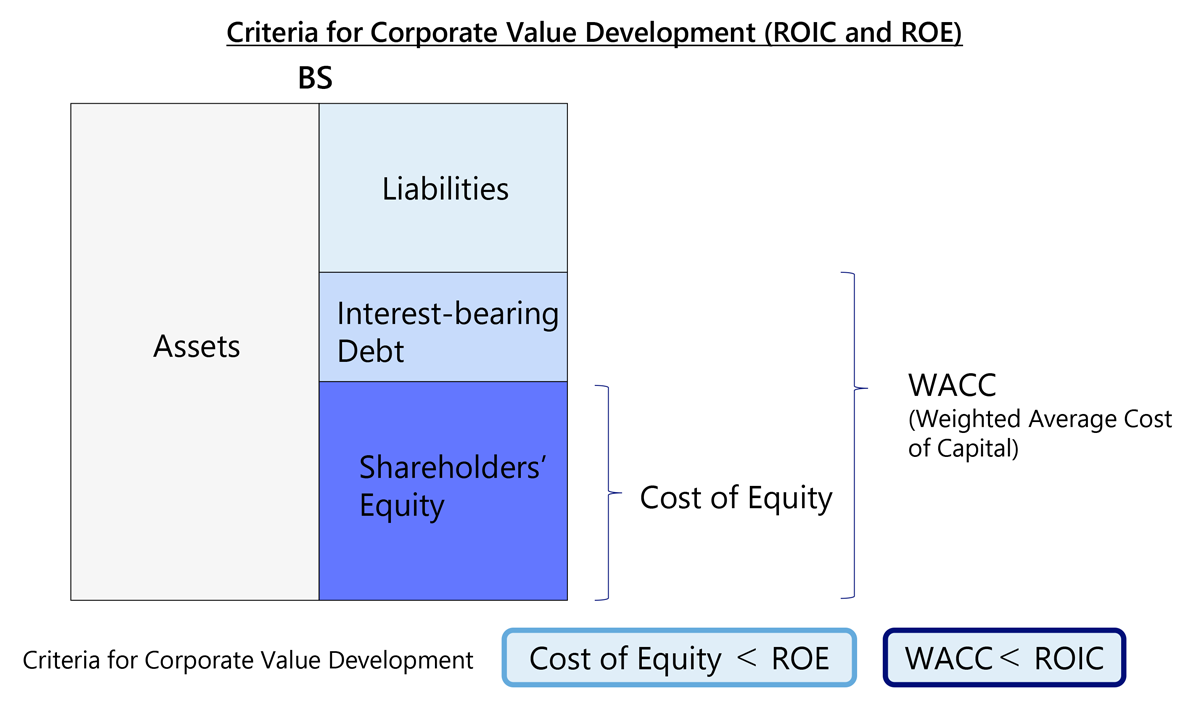
However, ROIC, which directly expresses a company's earning power, has been attracting attention because ROE has the property that its value can be apparently increased by increasing financial leverage.
An increasing number of companies have adopted ROIC management as a symbol for promoting management reforms, such as a fundamental review of business portfolios and cost structures.
Source) NRI
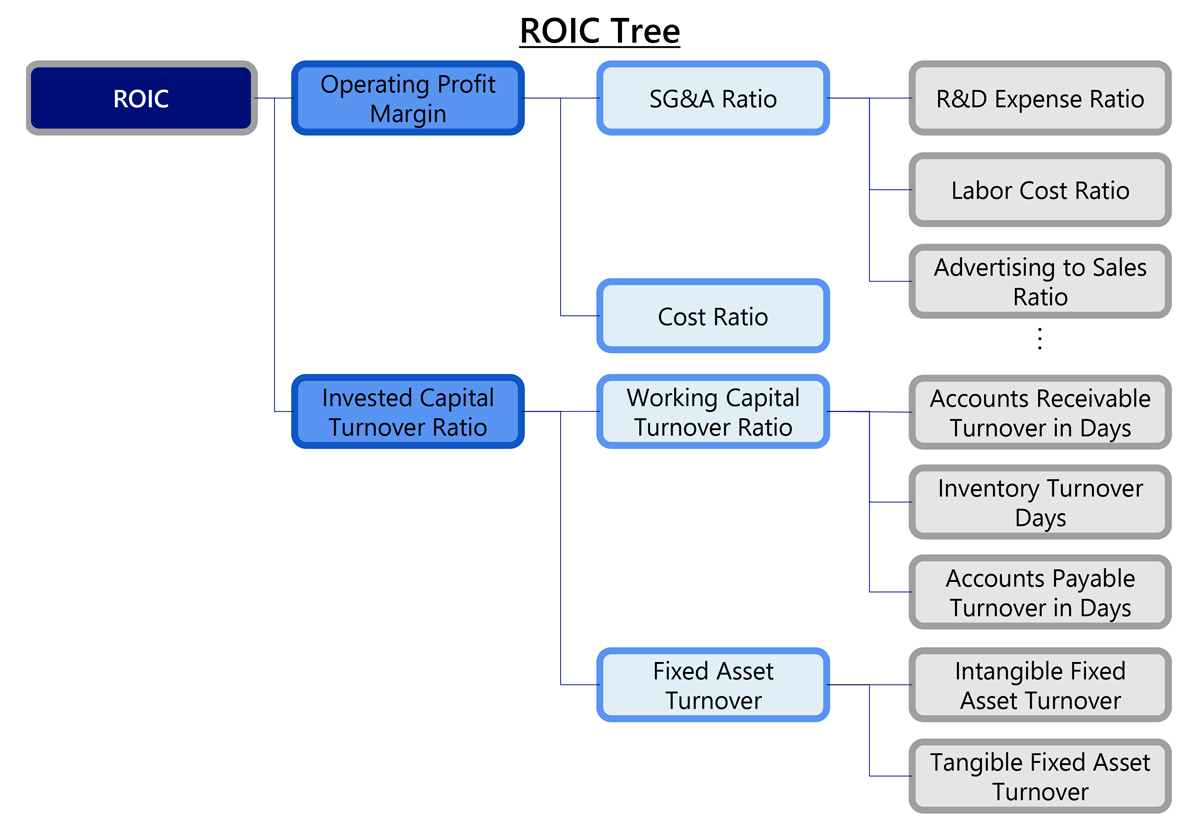
As examples of ROIC management, some companies have introduced "business portfolio management," which evaluates ROIC for each business as a profitability indicator, and "ROIC trees," which break down ROIC into KPIs for each division, such as sales and manufacturing, and link them together. By instilling the concept of ROIC from management to company-wide, some companies are working to improve profitability and corporate value.
Source) NRI
ROIC as a Management Tool
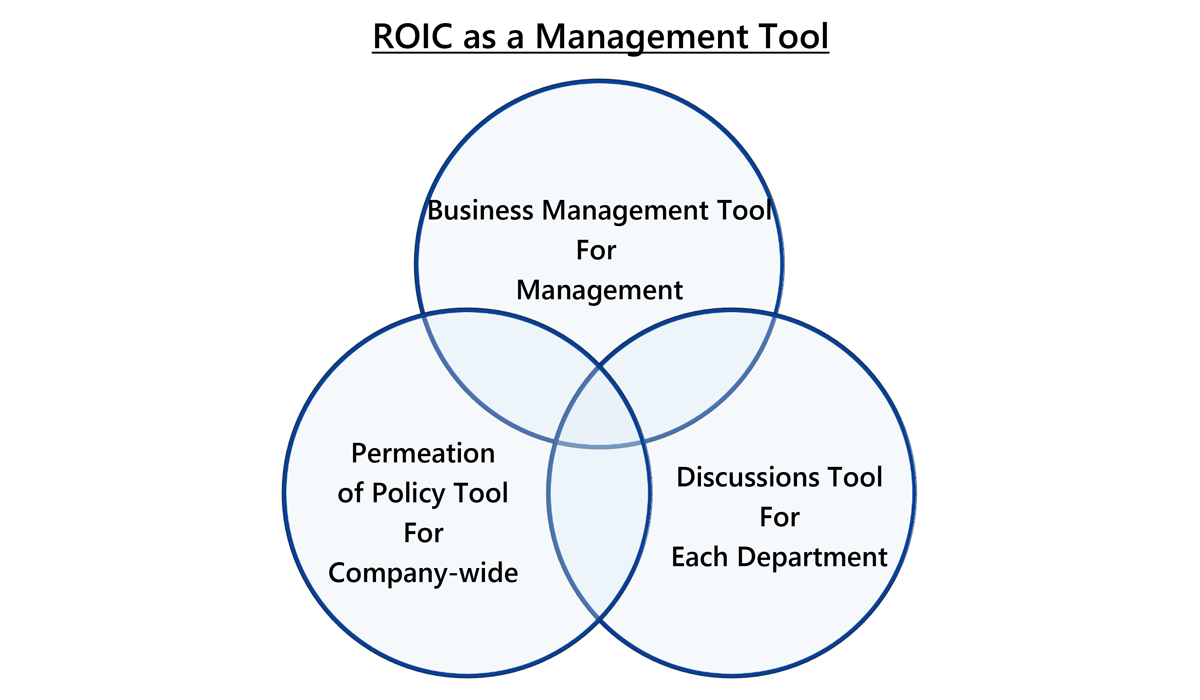
ROIC can be used in a diversity of ways, for example,
- As a tool for managing performance and business portfolio
In this case, it is mainly used as an indicator for business management by management.
It is used for IR communications, company-wide and business-specific performance management, business portfolio management, investment and loan management (hurdle rate setting), etc.
When used for performance management, it is important to clarify the relationship with other management indicators, including non-financial indicators, as well as the setting of medium- to long-term goals and the expected roles of each level. - As a tool to promote the understanding of management policies among all employees
In this case, it is used as a tool to promote understanding of the company's management policy among all employees.
ROIC is used to communicate the management policy and concept of how to create added value (the numerator of ROIC) from the capital and resources entrusted to it (the denominator of ROIC).
In this case, it is necessary to devise ways to promote understanding and penetration among employees, such as by putting into simple terms the goal of increasing ROIC to above the cost of capital. - As a tool for the management of each department to discuss ways to improve ROIC from a perspective of company-wide optimization
In this case, it is used as a tool to resolve conflicts between various organizations within a company. When it is discovered that the KPIs of activities pursued by each department are causing conflicts between them, it is expected that a compromise will be considered and discussed in a way that will have a positive impact on improving ROIC and reducing capital costs. In this case, it is necessary to ensure that management who mediate the conflict and personnel with decision-making authority understand ROIC, and training and workshops to solidify this understanding are effective.
Source) NRI
ROIC itself is a management indicator. However, if it is used not only as an indicator for monitoring by management but also for company-wide improvement efforts, it is important to clarify its meaning for the company and to take measures such as training for understanding and penetrating the indicator throughout the company.
When using ROIC in management, what is emphasized varies from company to company, so it is important to clarify its significance for each company.
Profile
-
Mayuko TaniguchiPortraits of Mayuko Taniguchi
Consulting Business Development Department
* Organization names and job titles may differ from the current version.